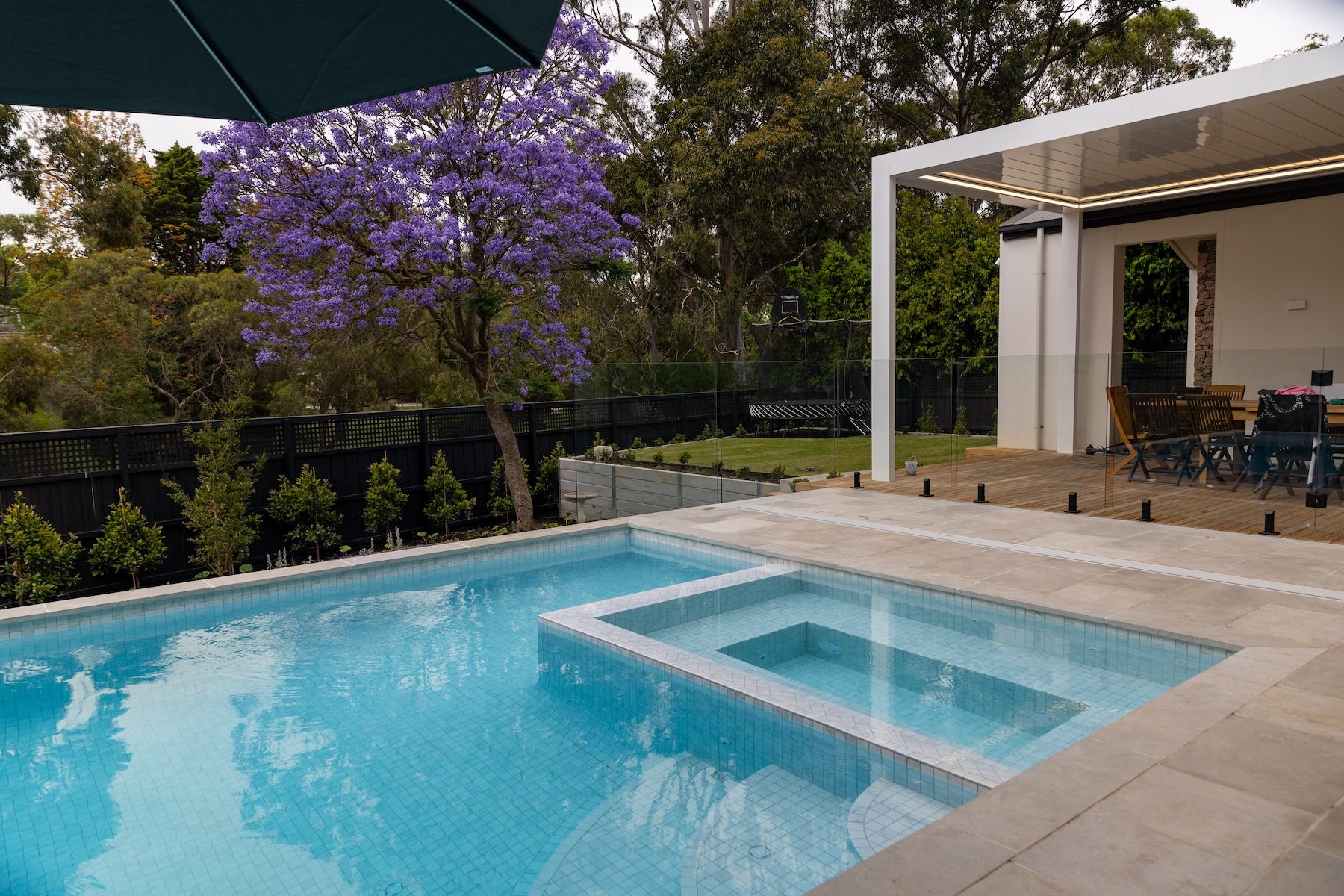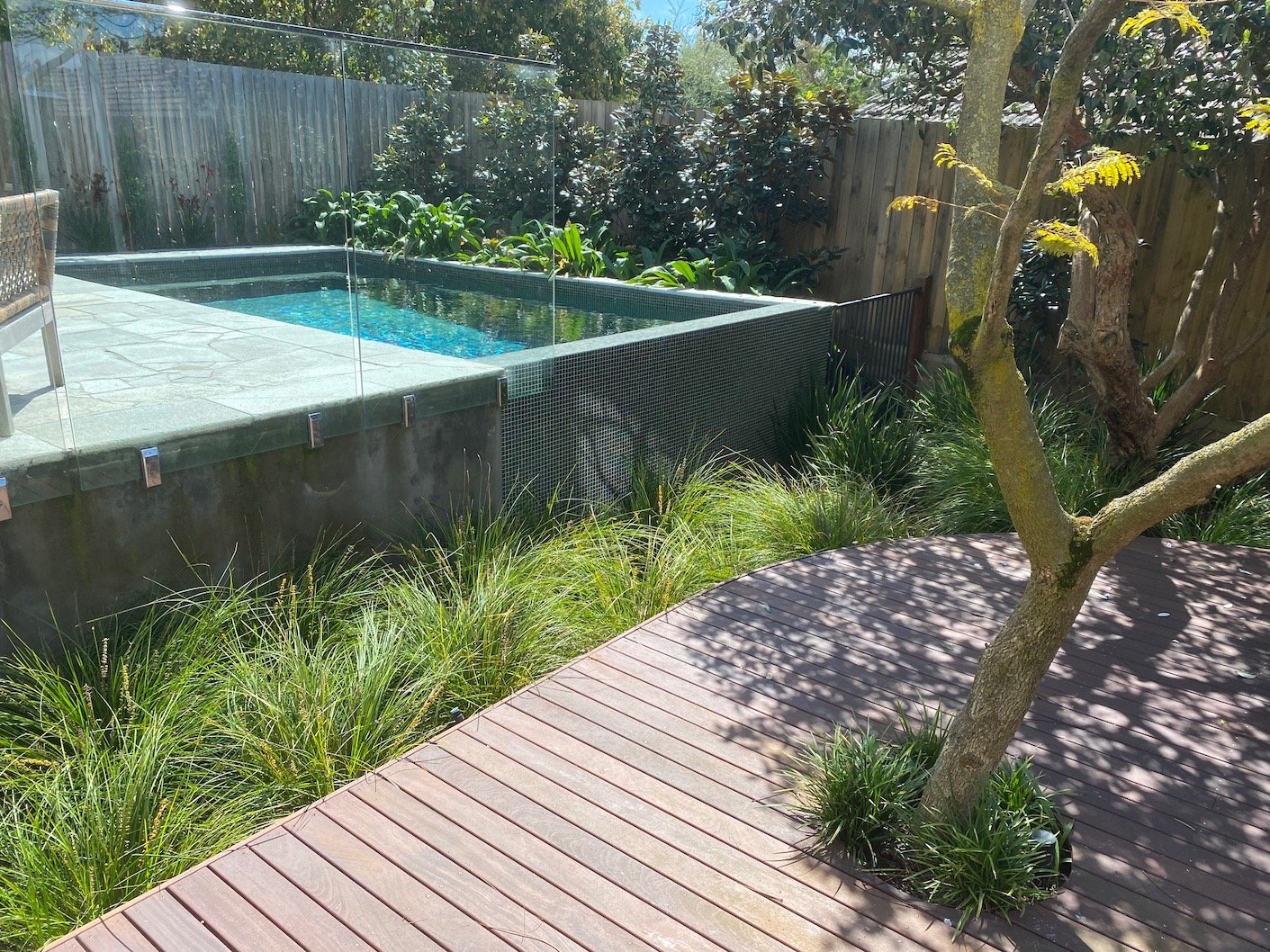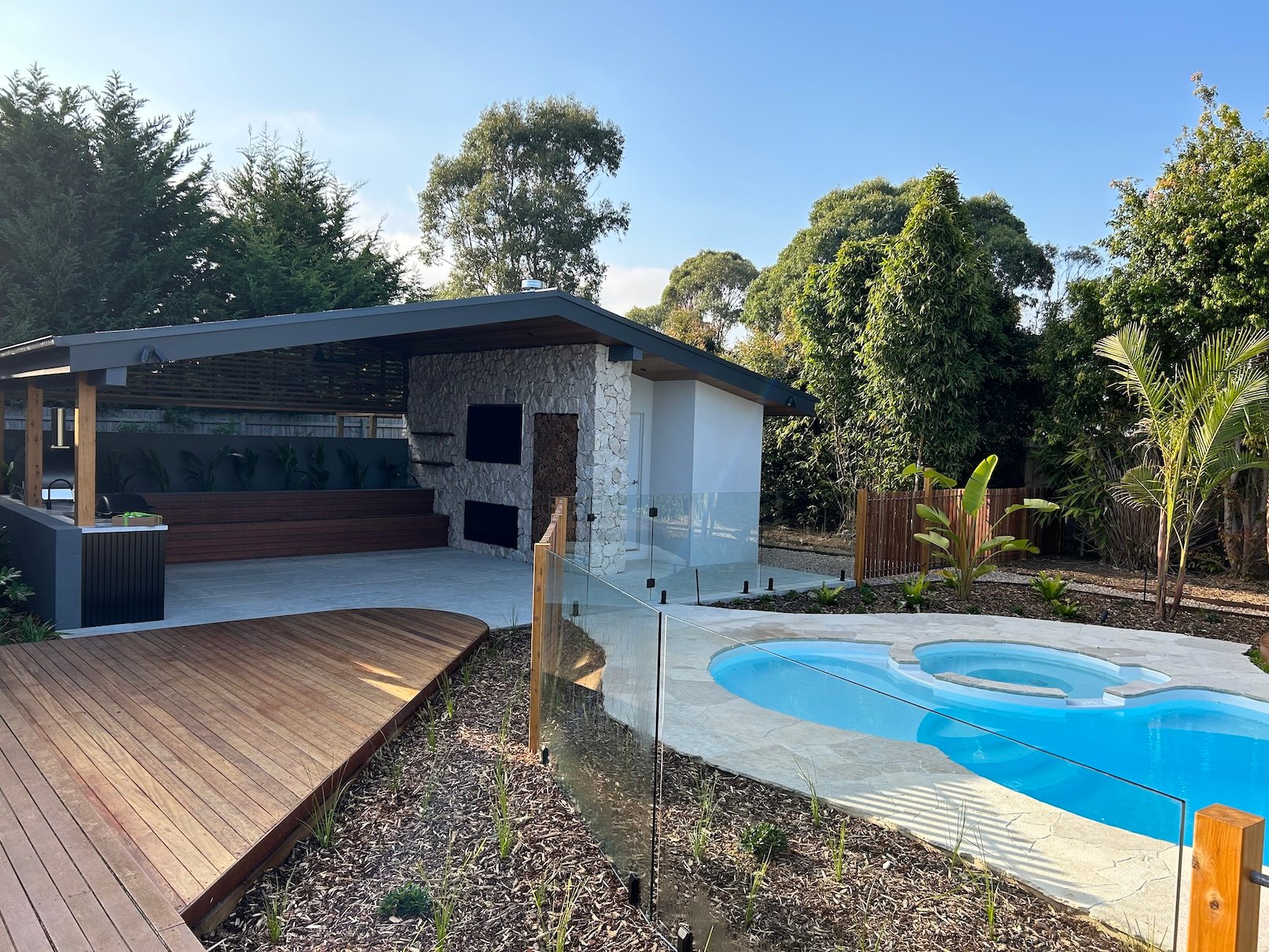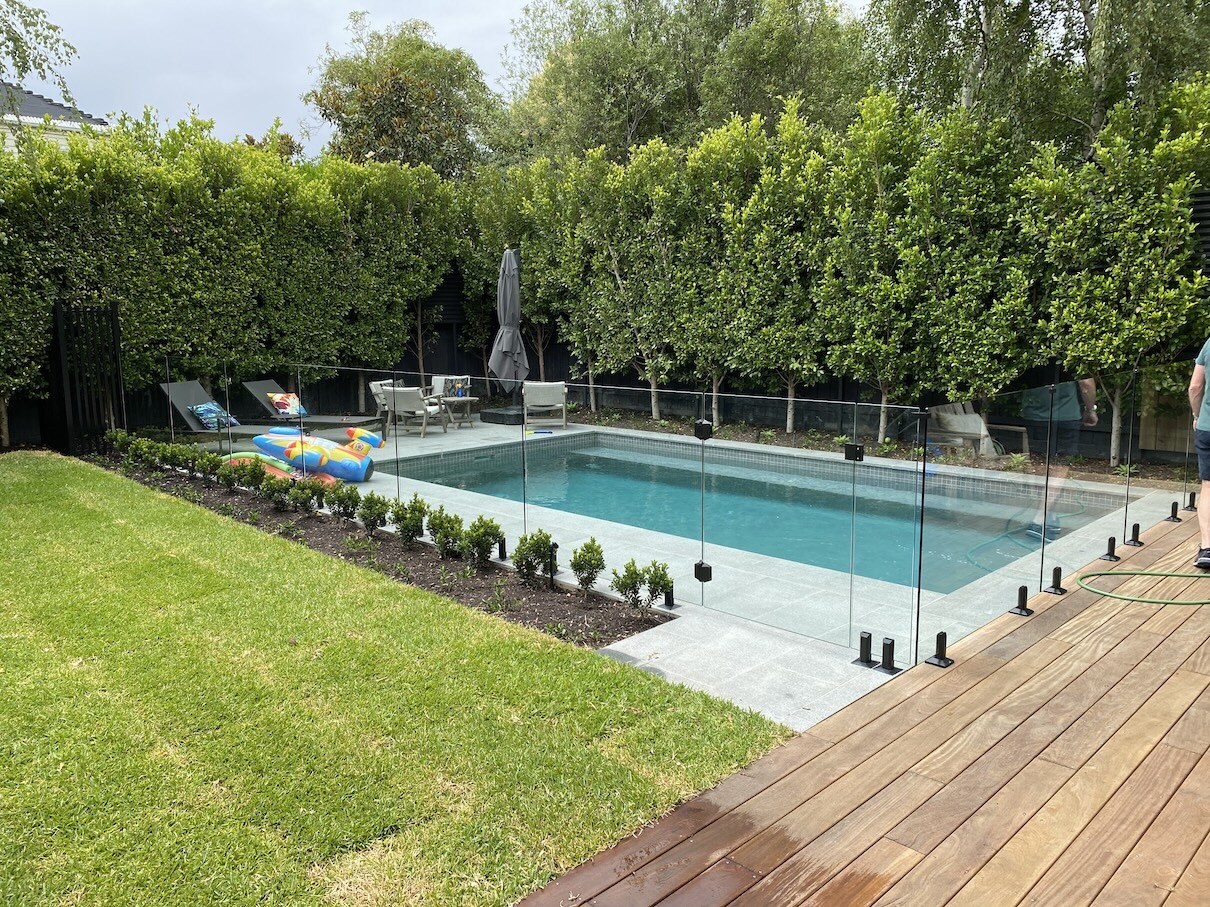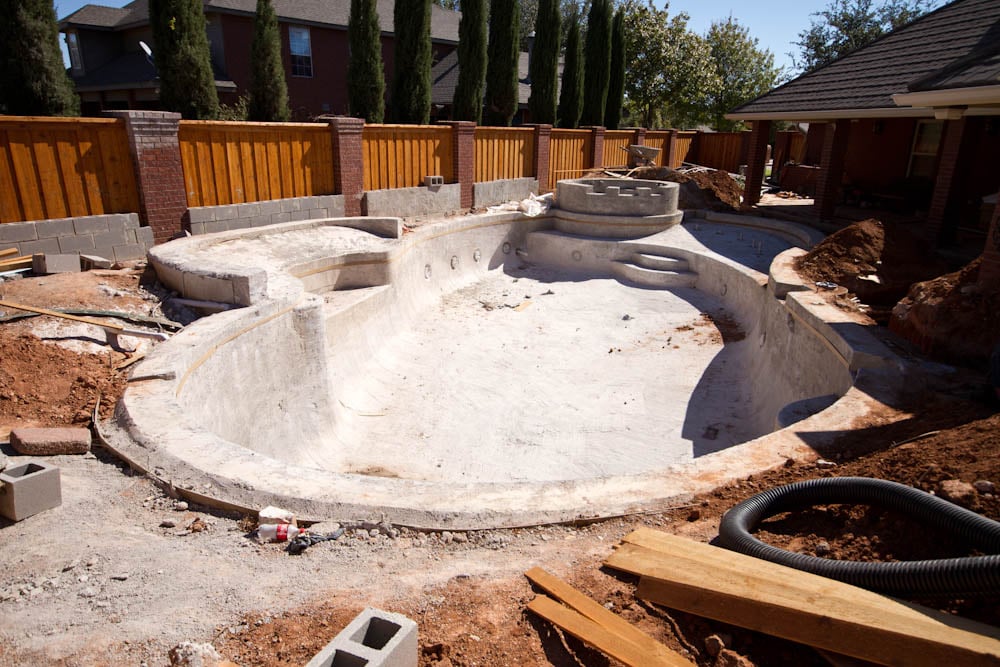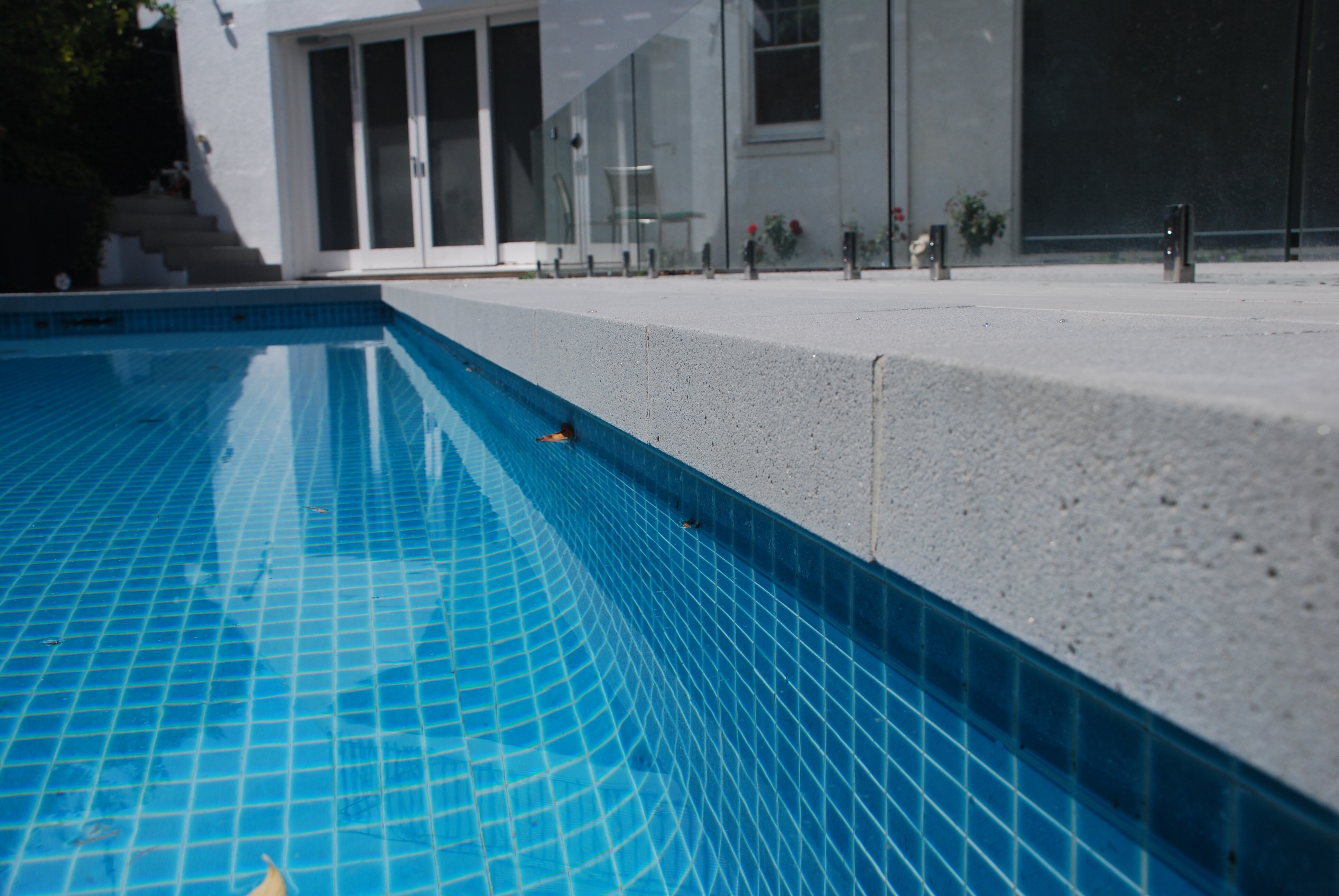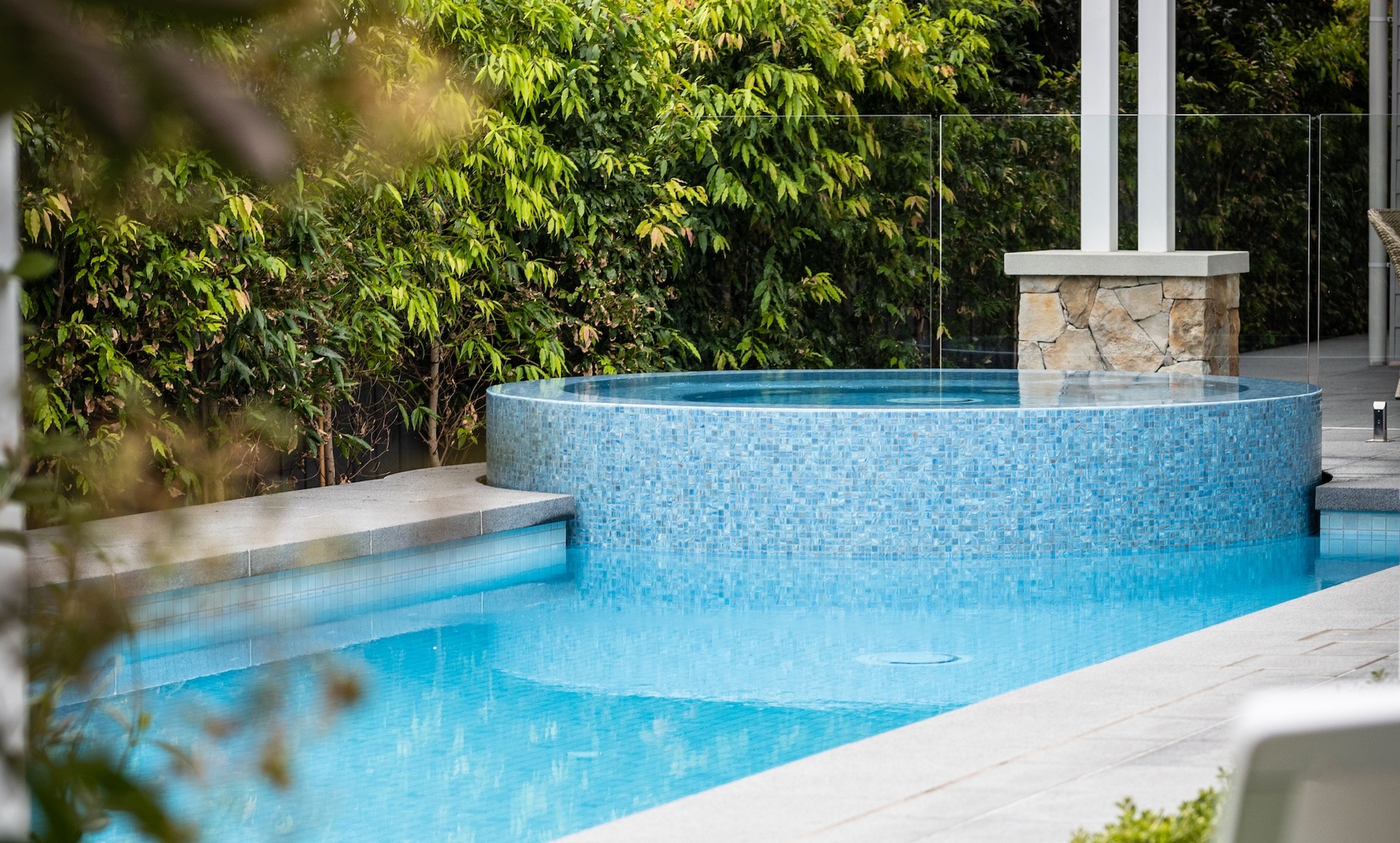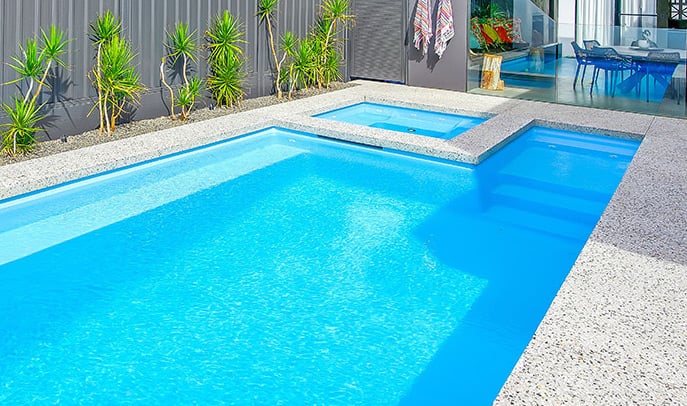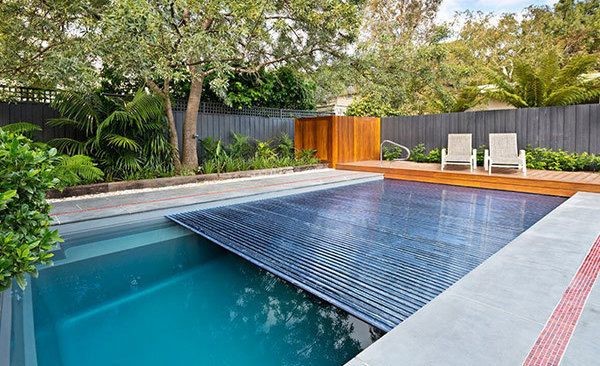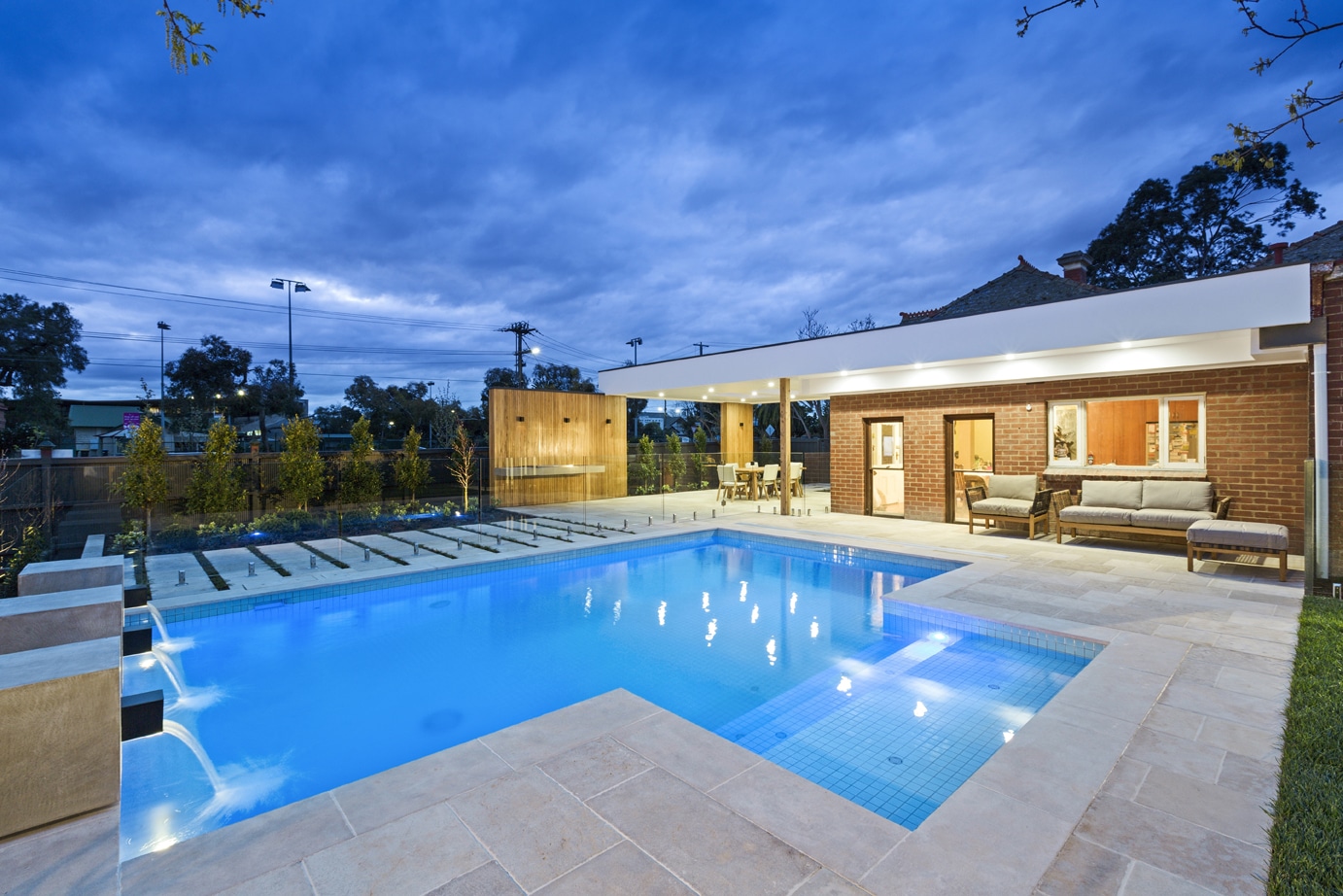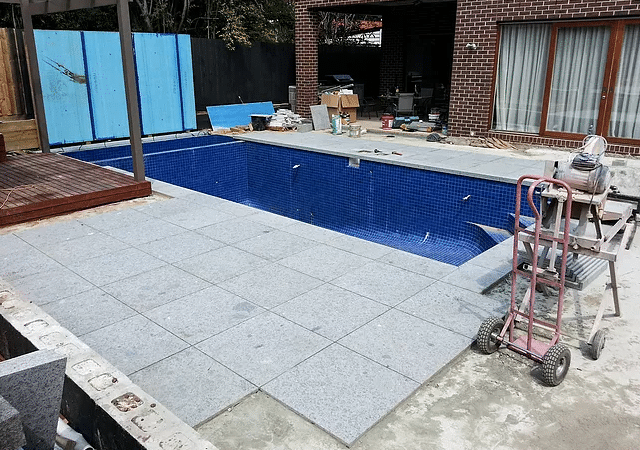
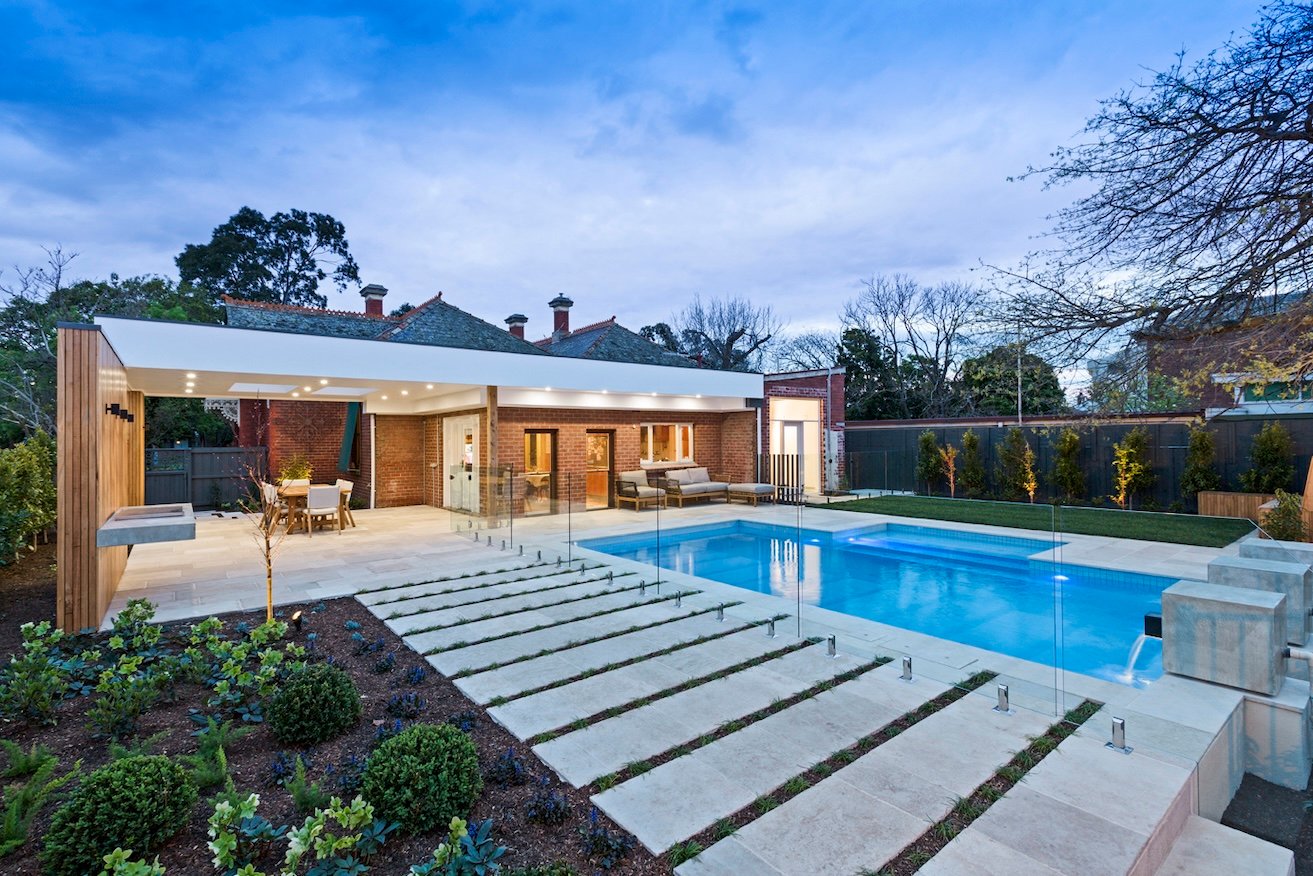
Are you thinking about installing a pool at home? Have the kids reached an age where the best thing you could do for them is put a pool in?
But when you think about the whole process do you find yourself asking, "Where do I start?"
We have over 35 years experience designing and creating beautiful gardens, the majority with a pool. We'd like to share our experience with you. So when you get to the end of this article you can feel like you will be able to move ahead with confidence.
If you're like most people, you probably already have some idea of the type and size of pool you'd like. You might have decided whether to include a spa. And you probably have a fairly good idea of exactly where in your back garden it should go.
But what do you do first? Who do you talk to? Should you go around to pool companies and look at displays? Or should you start by talking to garden designers?
Putting in a pool is a major project. And if you don't choose the right people to start with and understand the process properly, it can all start to go wrong pretty quickly.
So how do you avoid the mistakes that others make and ensure your pool and garden project runs smoothly. And you end up with pool that everyone loves.
One thing is true - it's knowledge that brings about certainty.
The first, most common mistake
The first, most common mistake that anyone can make when putting in a pool is thinking - "Landscaping is what goes around a pool!".
The truth is that a pool goes into a designed, landscaped environment.
Unfortunately too many people start the process of installing a pool by taking advice from pool builders on the style, shape and location of the pool. They sometimes even sign contracts and take deposits, then go in search of a landscaper to, you know, 'build some decking or paving' to go around it. This is like building a garage and then asking an architect to design a house around it.
We've all heard the old cliche - failing to plan is planning to fail. Unfortunately it's actually true.
The first person you should talk to when considering a pool is not a pool builder. It's a landscape designer!
We work with you to develop a brief for your garden, that includes everything about your pool. We then design the garden and liaise with any pool builder or installer you like to create a garden that will maximise the enjoyment of your pool by integrating all the other elements in the garden together.
When you think about it, this make perfect sense to do it this way. Otherwise you end up with a pool in the middle of an empty backyard!
-
Finding the right designer to guide you
So, how do you find the “right” designer for your new garden project?
You could say:
“Someone I feel comfortable with.”
And while that is true, personality alone just isn’t enough.
Landscaping your new garden is a significant investment. Often it can be the second most expensive investment you make, next to actually buying your home. So choosing the right professional requires careful consideration.
Here are some key measures to evaluate your new garden designer against:
- Their overall experience
- Their experience in the style of garden you want
- Knowledge of pool requirements (coping, paving, plumbing, etc)
- The level of horticultural expertise your garden will need
- Their availability for consulting during the construction phase
- Their ability to work with trusted landscapers (if they don’t build themselves)
- Proof of completed projects and reviews from happy clients
A designer’s work should exist not only on paper, but in real gardens, with real results. They should be able to show them to you.
What should your designer actually be doing?
A smart landscape designer should take what we call the “doctor's approach”:
Observe. Listen. Evaluate. Offer Solutions.
That may sound obvious, but it’s surprisingly easy for this process to go wrong.
For example:
If your chosen designer believes every garden should be native and drought-focused, yet you love lush exotic planting, the design they present may miss the mark entirely — and you’ll feel disappointed.
Or, if your designer has limited experience, they may suggest ideas that lack creativity or lead the project in the wrong direction.
The best designers continually cycle through observation, listening, evaluation, and suggestion with clients, until the garden is complete.
Observation
This means seeing what is actually there or noticing things that others might overlook. For example:
- A wet zone in the garden that may affect drainage
- A neighbouring property that is likely to be rebuilt as a two-storey house, which will then shade the garden
- Site access challenges during garden construction
- How the sun moves through the space
- What indigenous plants in the local area are thriving and growing well
- What challenges the site has due to size, shape or slope
Great design starts with seeing things clearly as they are, as well as seeing the potential in them.
Evaluation
Evaluation comes through asking thoughtful questions, such as:
“How do YOU entertain your friends and family?”
“How many people do you tend to host?”
“Do you gather around a fire outdoors, or prefer lounge-style seating?”Your new garden design must match your lifestyle, as much as your personal taste and aesthetics.
Offering Suggestions
A good designer’s role is to contribute ideas that inspire and elevate your new garden's concept. But the process of doing that might include suggestions that initially do not sit well with you. It's only by exploring options that sometimes trigger or draw out considerations you didn't know you had, that the right solutions can be found.
As we often tell our clients:
“We may initially suggest things you do not like - and that’s fine. We’ll keep exploring alternatives with you until it all feels right.”
That collaborative process between you and your designer is what creates outstanding gardens.
The key steps to success in landscape design
To help you understand the journey you will undertake in the creation of your new garden, here is a simplified overview of what should happen:
- A designer should constantly ask questions and respectfully challenge ideas
- Together, you create a design brief — a written record of what matters most
- Pools, entertaining spaces, sheds, planting preferences, pet considerations
- And remember: the brief evolves as the design evolves
- A designer’s key contribution is offering ideas that enhance your vision
- Compliance and site constraints must be identified early
- Costing must be aligned with the design, so expectations stay realistic
- If design and construction are separate, the designer should coordinate closely with the landscaper
Coordination with your pool company
Landscape design starts with a Concept Design. This is an overall vision of how your new pool and garden are going to look.
Once you approve the Concept Design, we send it to your chosen pool company for review and comment. Any feedback is discussed and any design revisions needed are done.
Next step is a much more detailed Master Plan for the pool and garden which specifies exactly which materials and finishes are to be used in construction and which exact plants will be planted. This Master Plan is again send to the pool company, and you, for comment or revision.
All of this coordination allows you to have confidence that everything has been thought about.
(We have other blogs that give you more examples of how pool installation can go very wrong, but here we are talking about how to get started and the key point is, design first before even paying a deposit on your pool.
What if I am being pressured to install the pool?
Most pool companies are professional and pleasant to deal with. Once you advise them you are working with a landscape design firm, even if you've already agreed to a pool or even signed a contract they will be happy to work with us. (We will manage the whole project for you, so you don't have to worry about them.)
But occasionally, we have seen pushy pool companies who apply pressure to clients for selfish reasons. (They want to include your pool sale or installation in this month's figures). Some even try to bypass the garden designer and just "get the pool installed".
If you appoint someone like Whyte Gardens, we can push back on the pool company or you can refer any pressure you get from them back to us. We will back you up.
What you want is the pool company to take the approach of:
“Let's all work together on this…”
That tells you they are interested in you.
This attitude is what makes the collaboration between designer, client and pool company successful.
What if there is no other realistic location - can't I just install the pool now?
It's not just the location of the pool that matters, it's also the heights and levels of the pool.
So even if you, or the pool company, did know the exact location the pool should go right down to a few cm, if you don't know the finished level or height the top of the pool needs to be, you can't install it.
(You can't raise or lower a pool once it's installed.)
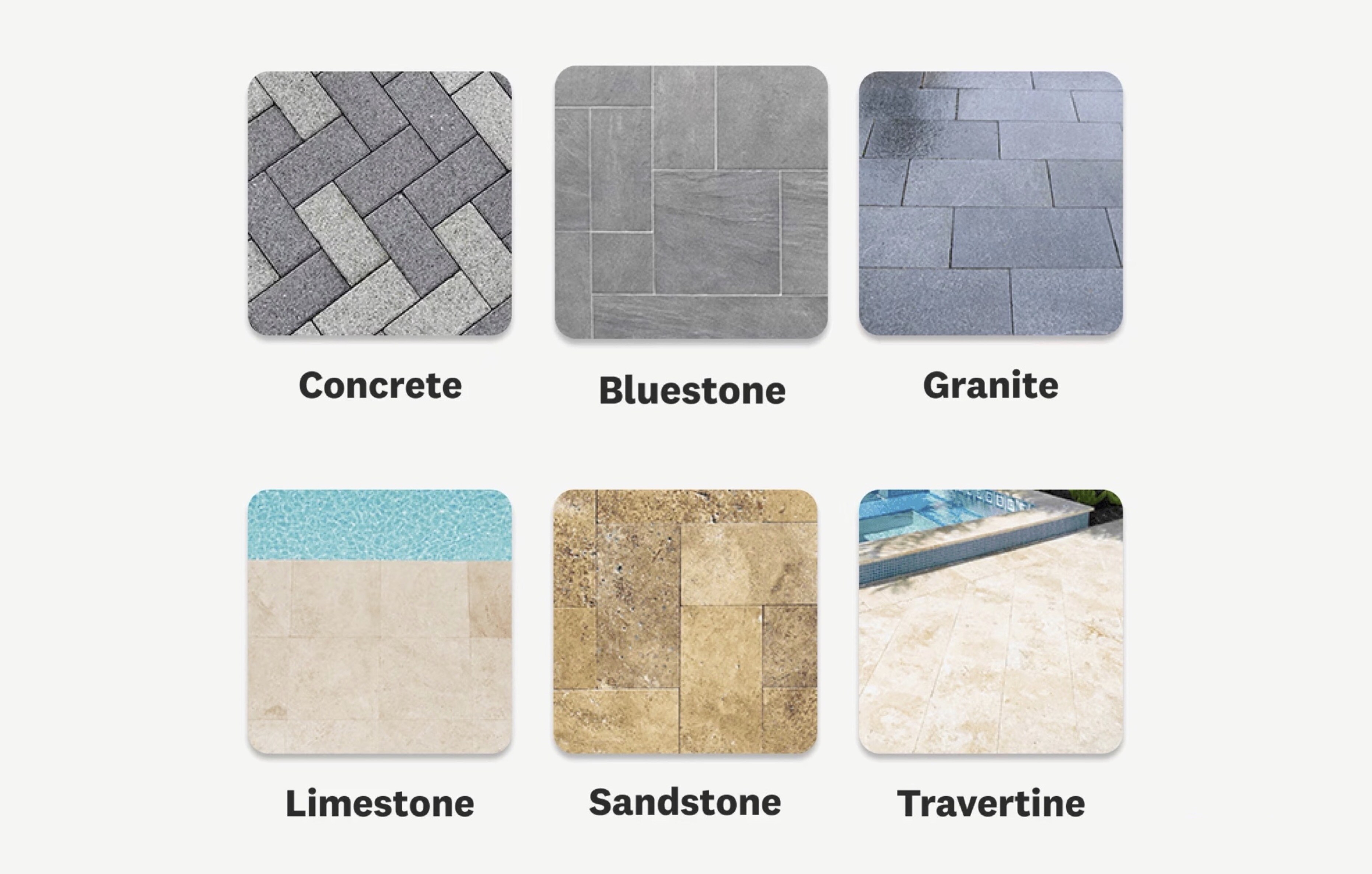
Depending on what is going to go around the pool, these levels can vary enormously, between say timber decking, paving or honed concrete. Paving would add about 50mm to a concrete base. Honed concrete can require up to 100mm. These different heights and levels can have flow on effects to other parts of the garden. So you need to have all this clearly known and established before you put the pool in.
Ask yourself, "What's the rush?"
What comes first, pool installation or landscaping?
There is no simple answer to this question.
It can differ enormously depending on the site and scope of the project. Typically, a landscaper may need to go in and do some site preparation work. Then the pool builder comes in after them. But sometimes the excavation of the pool is the first thing to be done. It really all depends on the garden design concept, the site, the type of pool being installed (concrete or fibreglass) and many other factors.
You are always best to start with talking to the designer/landscaper first before the pool company to ensure everything is co-ordinated properly. And nothing gets done out of sequence that can serious repercussions for the rest of the project.
In summary
Do you have some ideas in mind for what you'd love your garden to look like?
Have you been looking at gardens online, in magazines or in person, imagining how wonderful a new garden would be?
Are you at the point where you really want to do something about your existing garden?
If this is you, then this article is one you must read. It will help you overcome the first, and often the most challenging barrier to getting started - and that's knowing where to start!
You might already know the elements you’d love to include in your new garden - a pool, decking, outdoor kitchen, firepit, veggie garden, basketball court? Perhaps you feel drawn to a certain style of garden, or you can picture the feeling you want the space to create.
But then comes the hardest part:
How do you bring everything together into one cohesive garden that feels right — and lives up to what you’ve imagined?
That’s where your real journey begins. (And where we can help you!)
Your ideas are the foundation of a new garden
Your ideas, desires, and dreams are not just helpful to the creation of a new garden - they are essential to it.
To state the obvious:
It's your garden. Your home. Your dream.
Anyone who becomes involved in the process should be there to support your vision, not replace it.
The hallmark of a truly great landscape designer is someone who doesn’t take over the creation of your new garden. They should simply help you shape what you already have in mind and what you already want into something achievable, functional, and beautiful.
They should draw out of you - your hopes, your dreams, your aspirations and your inspirations - and turn them into a garden you love.
If the designer takes too much responsibility for creating the garden away from you, without allowing enough input from you, the project can slowly drift away from what you had originally imagined.
Your dream for your garden must be nurtured.
But that doesn’t mean it shouldn’t be challenged.
Sometimes we find clients will request something that might sound right to them in theory. But our designers, with years of experience under their belts, know that it won't actually deliver, in reality, what the client imagines it might.
In those moments, you want a designer with the confidence to offer you alternatives that will still enhance your vision — not stray from it.
Finding the right designer to guide you
So, how do you find the “right” designer for your new garden project?
You could say:
“Someone I feel comfortable with.”
And while that is true, personality alone just isn’t enough.
Landscaping your new garden is a significant investment. Often it can be the second most expensive investment you make, next to actually buying your home. So choosing the right professional requires careful consideration.
Here are some key measures to evaluate your new garden designer against:
- Their overall experience
- Their experience in the style of garden you want
- Knowledge of compliance and building requirements (easements, permits, regulations)
- The level of horticultural expertise your garden will need
- Their availability for consulting during the construction phase
- Their ability to work with trusted landscapers (if they don’t build themselves)
- Proof of completed projects and reviews from happy clients
A designer’s work should exist not only on paper, but in real gardens, with real results. They should be able to show them to you.
What should your designer actually be doing?
A smart landscape designer should take what we call the “doctor approach”:
Observe. Listen. Evaluate. Offer Solutions.
That may sound obvious, but it’s surprisingly easy for this process to go wrong.
For example:
If your chosen designer believes every garden should be native and drought-focused, yet you love lush exotic planting, the design they present may miss the mark entirely — and you’ll feel disappointed.
Or, if your designer has limited experience, they may suggest ideas that lack creativity or lead the project in the wrong direction.
The best designers continually cycle through observation, listening, evaluation, and suggestion with clients, until the garden is complete.
Observation
This means seeing what is actually there or noticing things that others might overlook. For example:
- A wet zone in the garden that may affect drainage
- A neighbouring property that is likely to be rebuilt as a two-storey house, which will then shade the garden
- Site access challenges during garden construction
- How the sun moves through the space
- What indigenous plants in the local area are thriving and growing well
- What challenges the site has due to size, shape or slope
Great design starts with seeing things clearly as they are, as well as seeing the potential in them.
Evaluation
Evaluation comes through asking thoughtful questions, such as:
“How do YOU entertain your friends and family?”
“How many people do you tend to host?”
“Do you gather around a fire outdoors, or prefer lounge-style seating?”
Your new garden design must match your lifestyle, as much as your personal taste and aesthetics.
Offering Suggestions
A good designer’s role is to contribute ideas that inspire and elevate your new garden's concept. But the process of doing that might include suggestions that initially do not sit well with you. It's only by exploring options that sometimes trigger or draw out considerations you didn't know you had, that the right solutions can be found.
As we often tell our clients:
“We may initially suggest things you do not like - and that’s fine. We’ll keep exploring alternatives with you until it all feels right.”
That collaborative process between you and your designer is what creates outstanding gardens.
The key steps to success in landscape design
To help you understand the journey you will undertake in the creation of your new garden, here is a simplified overview of what should happen:
- A designer should constantly ask questions and respectfully challenge ideas
- Together, you create a design brief — a written record of what matters most
- Pools, entertaining spaces, sheds, planting preferences, pet considerations
- And remember: the brief evolves as the design evolves
- A designer’s key contribution is offering ideas that enhance your vision
- Compliance and site constraints must be identified early
- Costing must be aligned with the design, so expectations stay realistic
- If design and construction are separate, the designer should coordinate closely with the landscaper
Q&A
How will I know if my ideas are the best option?
The answer to this will become clearer after you've met with and briefed your designer and seen what they come back to you with as a 'Concept Design'.
The proof of how well developed any idea is, is can it be successfully incorporated into a garden design in a way that is both appealing and useful.
When it comes to suggesting ideas, that might not be right, you want someone who can say:
“Let me offer another approach here…”
But you want that to come from someone who is not so attached to their own ideas that they override yours.
A balance between designer and client is what makes collaboration successful.
How do I evaluate whether a designer is the right fit?
Your first two starting points to answer this question should be:
- Their website and portfolio
- Client reviews and testimonials
Also, you should pay attention to what they share publicly, say via social media, as this often reveals how they think and what they value.
What can I do to be confident in my choice?
Before committing to any landscape designer or landscape architect you should expose yourself to examples of great gardens:
- Visit friends’ gardens and notice what you’re drawn to, what you like and don't like
- Attend Open Garden Scheme events
- Explore material suppliers like Eco Outdoor or Yarrabee Stone - for touch & feel
- Pay close attention to paving, cladding, planting combinations, and outdoor layouts
The more you see, the clearer your own vision for what style of garden you like will become clearer.
In summary
Landscaping a new garden with a pool for your home is a major investment - not just financially, but emotionally. It can feel a bit challenging, even overwhelming.
You want someone who can guide you through it all, from start to finish. Everything from design to construction. It's so much easier to have only one point of contact through the whole thing. Especially someone to manage the pool company for you. (That's what we've been doing for over 35 years at Whyte Gardens. We've done it for nearly 600 gardens now.)
Ultimately, the best gardens are created when your vision is respected, your lifestyle is understood, and the right professional guides you through the process from dream to reality.
To book your free consultation with one of our landscape designers please click the link below. You can choose an online or on-site consultation. It is completely free and without obligation and allows you to discuss your project with a professionally garden designer, share your ideas, hopes and dreams, find answers to challenges you might be facing and get a realistic idea of what your project might take in terms of cost and time. Why not book today?

Topics: