
A design encapsulates the entire vision for a new garden. But it is also simply a plan on paper. No matter how good it is, it cannot possibly cover every single thing that could arise on a landscaping project. Here are two examples from the same job we did for a client in Malvern. One silly, one frustrating.
First, the silly one.
We built a courtyard for a client with an upper pond featuring a waterfall that flowed into a lower pond with stepping stones. The client wanted goldfish in the upper pond where they could be seen as they sat outside on their deck. No problem. Goldfish went in.
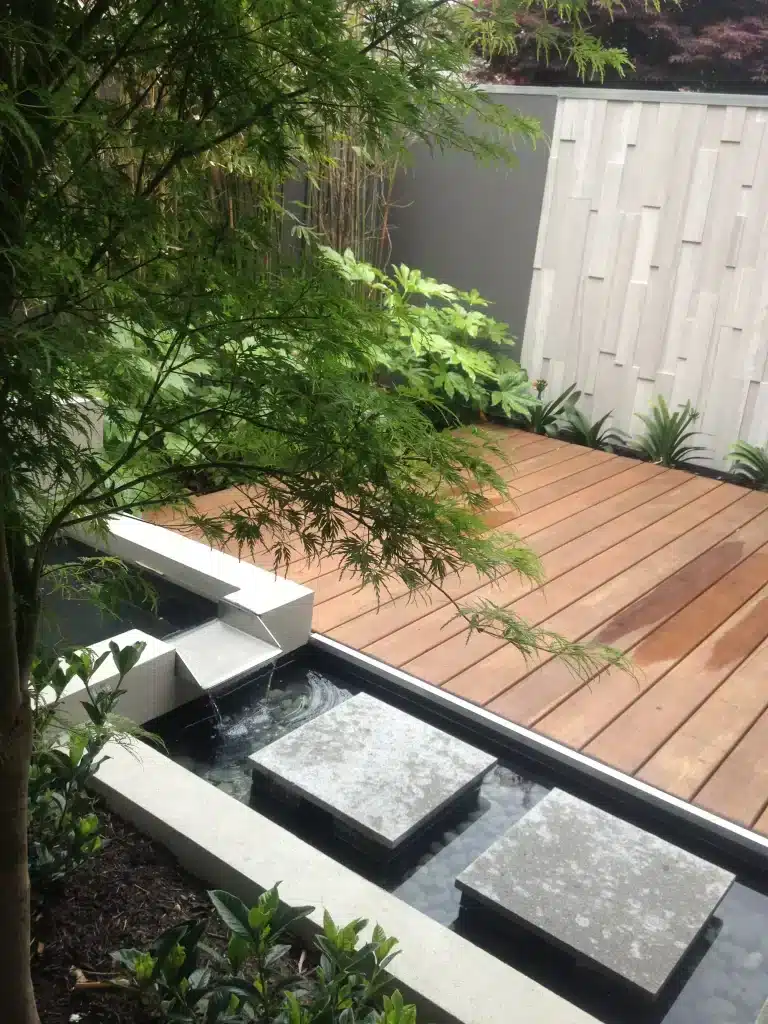
There was just one thing nobody planned for. The goldfish loved the waterfall. Every night the client would come home from work, walk out into the courtyard, and find that the goldfish had gone over the edge and plopped down into the lower pond where they were largely hidden beneath the stepping stones.
The fix was simple. We put a little grate over the spout, and the goldfish stayed where they were meant to be. A silly little story. But no design drawing in the world has a note on it that allows for the fact that goldfish like to ride down waterfalls.
Now the frustrating one.
For privacy this same client wanted a 1.8 metre high solid fence running along their front footpath. We did not see a problem with it. So we put in the permit application. It got refused.
We went back to the council and pointed out something you can see in the photograph. Across the road and one house down, there is an existing 1.8 metre high solid fence. Exactly what our client wanted. Surely, if they can have it, our client can have it.
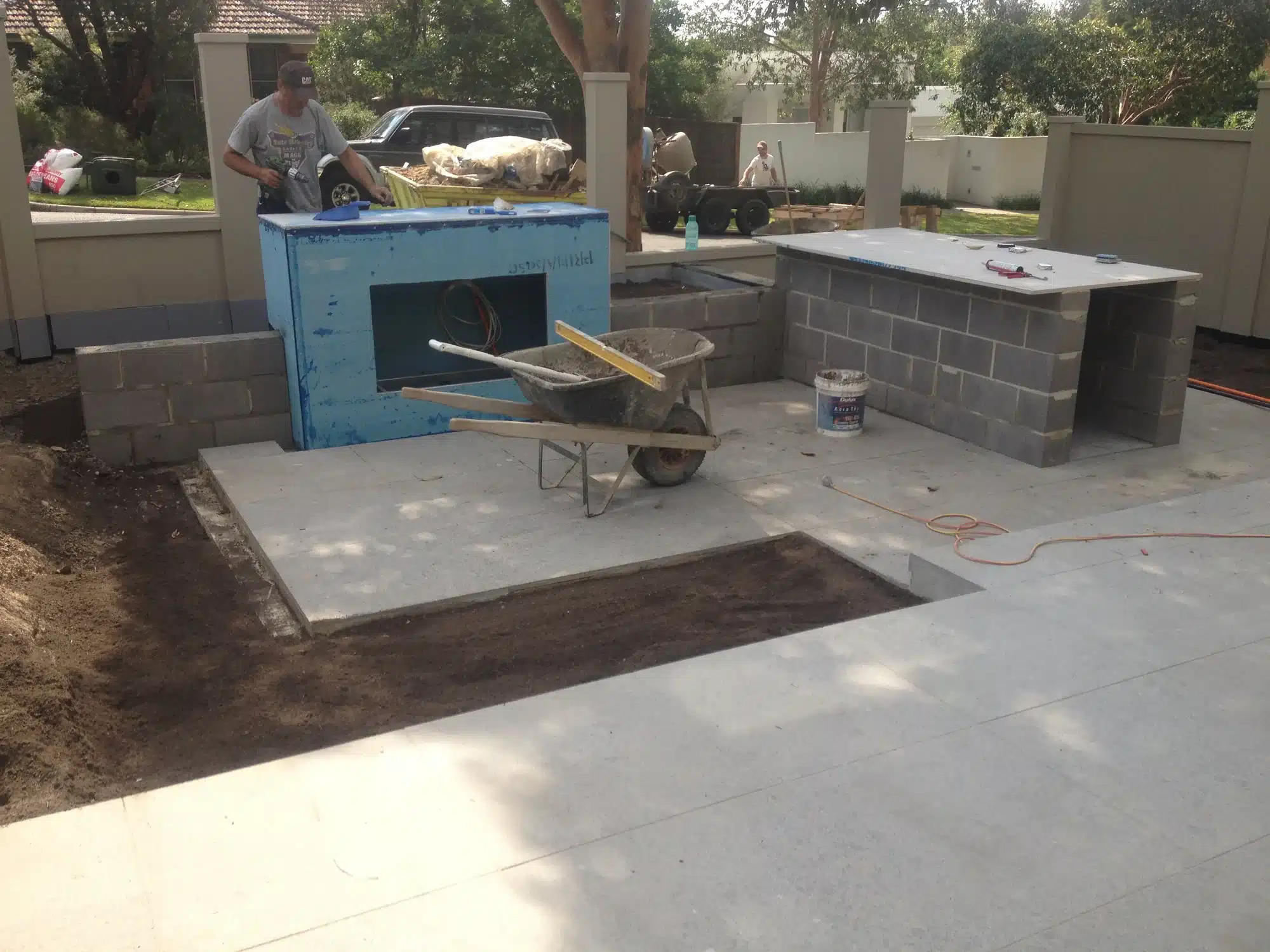
No, said the council. That wall was built as a part of a new home building project, which goes through the new build department, and they have different regulations. Our client has an existing home, which is handled by a different department. The rules say they can have it, but we cannot.
We dug a little deeper and found the issue. It turned out the fact the proposed fence was solid was the problem. We were told our fence had to have slats across it, to allow visibility through it Never mind that we were planting a hedge on the other side, so there would never be any visibility anyway. But the point was for the application it was a box that had to be ticked.
This is something you have to understand can happen on any project. Sometimes you bump into council decisions that make no logical sense, and they are not going to change. You can challenge it at VCAT if you are so inclined, but that is a long and costly road. On this one, we did as the council asked.
Here is the part that matters, though. From the client’s perspective from inside the garden, he was going to get the privacy he had originally wanted from a solid fence. It was just going to come from a hedge rather than a fence. We simply bought larger hedging trees to plant so his privacy arrived quickly, instead of him having to wait years for them to grow.
That is the real lesson from both stories. You cannot think of everything upfront. Goldfish will do things that goldfish do. Councils will do things that councils do. What you need is a team with the flexibility to adapt when the unexpected happens. Because on every single garden project, something always will.