
Today, lots of people are asking AI to design their gardens. If you do that, whatever AI tool you use, you will get a “garden design” in about thirty seconds. You may be amazed at how incredible it looks. How your tired old garden has been instantly transformed into something that looks almost perfect.
At first glance the result will look just like a professional landscape designer has done the work. It will have a stunning pool in a seemingly perfect location, a deck outside your back door, lovely layered planting along the fence, with perhaps a written paragraph confidently selling you your new garden.
But here’s the catch. It will be very much like the same garden it gave to the last person who asked it.
That’s not meant to be a criticism. It’s just the reality of what AI is. You see AI has read every garden design article, book, forum and portfolio ever put online. It has worked out what they all have in common. When you ask it to design your garden, it gives you the average of all of them, adjusted a little for whatever instructions you gave it. It is applying general knowledge, the same for everyone, to every garden it “designs”. And believe it or not, that makes it an excellent place to start.
We published an article about this earlier. You can read it here using this link – Whether you should use AI to design your garden.
The short answer in that blog was – YES to generating a possible design for your garden. But a big NO to actually using that design to build from. This article forms a longer answer. It explains what AI is actually good for at each stage of designing a garden, and where it quietly stops being useful without you realising it.
What AI knows, and what it can never know
AI knows what gardens are like. But it does not know what your garden is like. Or should be like.
It cannot see for example that your block drops 1.2 metres from the house to the back fence. Or that the neighbour’s gum tree throws shade across the lawn every day from 2pm. It does not know that the sewer actually runs diagonally under the spot where it just put your new pool, or that your council has a heritage overlay on the entire front of your house. It also does not know that your mother-in-law uses a walking frame, that your son is currently thirteen and so wants nothing to do with the family, or even that you actually don’t like hosting social gatherings and only said “entertaining” because that is what people are meant to say.
None of this is in the AI’s training data. Because none of it has ever been written down in the “general knowledge about garden designs” that AI refers to.
So this is where the ‘human difference’ comes in. Because a human designer can find out all those things, just by standing in your backyard and looking. And by asking you questions.
See AI might have read everything there is to know about garden design. But it’s never been to your place. It has never met your family, petted your dog or seen the excited look in your eyes when you start talking about the garden you’ve been dreaming of for years.
Where AI can help you and at which stages
AI can be a real help, when used in the right place, at the right time, in the right way. Listed here are 2 key stages where that help can best be used.
Before you talk to a garden designer. This is where AI can be at its strongest. The first thing you should do is ask AI to list all the questions a landscape designer is likely to ask you about your new garden when you meet for your initial consultation. Not only should you ask for the questions but the answers as well. Also, ask it what key decisions you will need to make along the way during the creation of your garden, so none of them arrive as a surprise. Next, ask it to give you the key milestones you will need to reach during the design phase. Remember also to ask it to explain any landscaping terms that you might have heard but never really understood. It will define them all for you: from Concept Design to Master Plan, project feasibility and provisional sums.
If you do all this, you will arrive at your first consultation with your landscape designer better prepared than most. And the meeting will be twice as valuable to you than if you had never asked AI all those preliminary questions first.
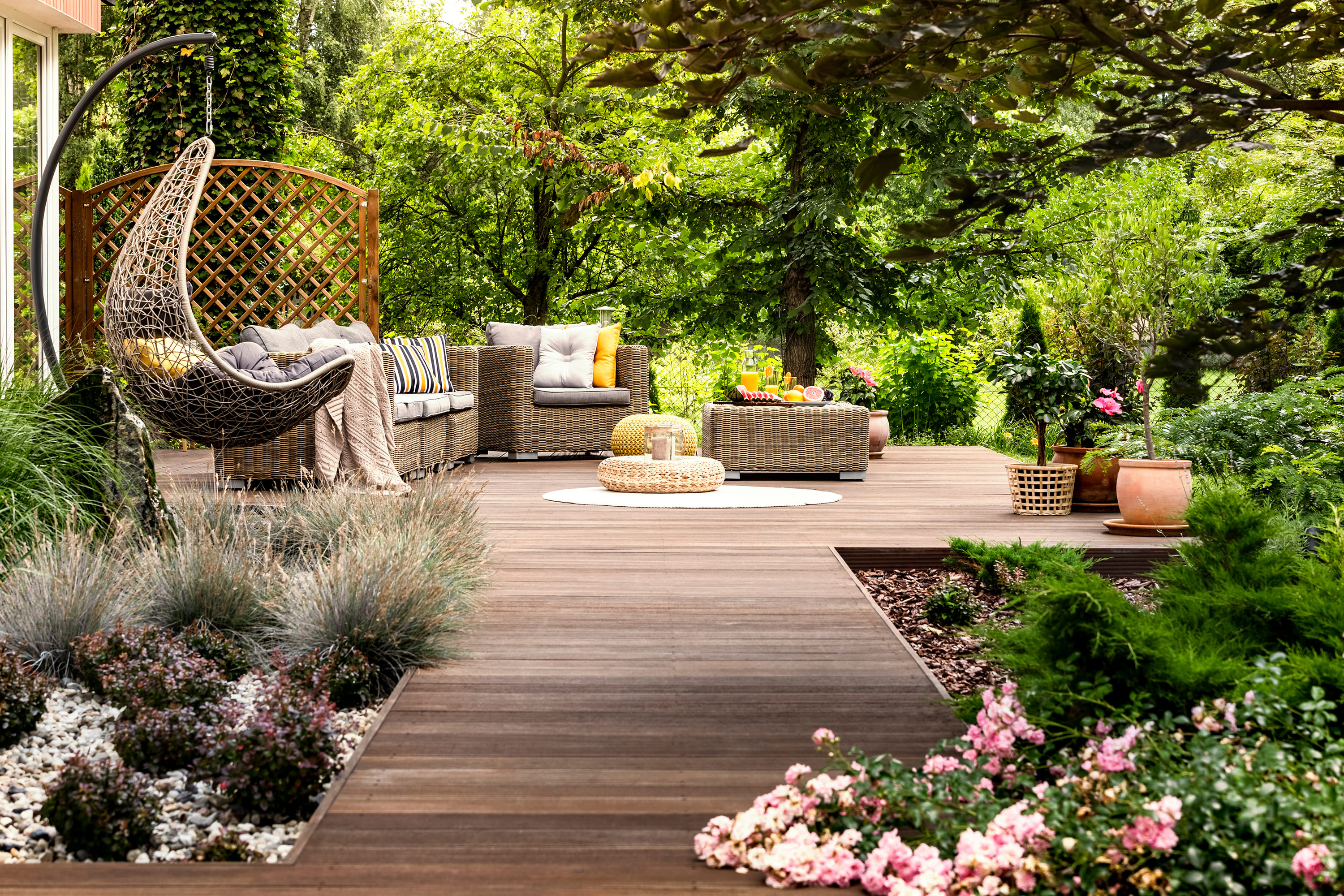
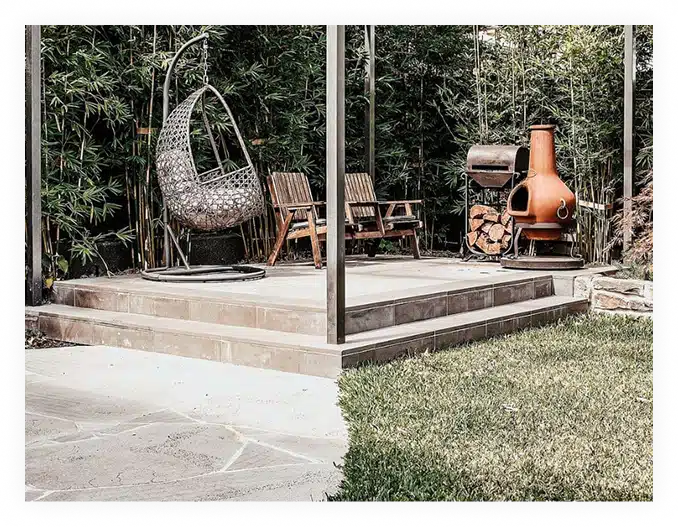
See what your new garden could look like Photo tools are another useful feature of AI. They allow you to take a photo of your own backyard and then ask AI to redesign it for you in 3 or 4 different styles – say Modern, Coastal, Native or Hamptons. (Whatever takes your fancy). But remember when you do this, you are not getting an actual garden design that can be quoted and built. You are just exploring some different ‘looks’ for your garden to see what you might like. (A bit like trying on a range of different clothes to discover which one suits you best.) But all this really tells you is that you prefer one that features more timber but dislike the one that has all the white rendering. Which is something you might not have known before you saw these concept designs.
But don’t ever imagine that someone could actually build a garden from them. Let alone quote the job. (Just like a builder can’t quote and build a house from just a picture of one.) So simply bring them along to your meeting with the landscape designer. They will be very insightful in showing the designer what styles and garden features you like. They could end up saving you many hours in design work.
Where AI moves from helping to hindering
The problems with AI start when you try to move it from preparation into decision-making. And the real problem is that most people don’t seem to notice when this transition happens.
AI is too confident about things it has not seen. Unfortunately AI is a little too confident for its own good. It will never say “I would need to look at the block first before I can start designing”. It just forges ahead and gives you a plan and a reason, and both sound right. But if you take that plan to a landscaper for a quote, they can’t quote it as it’s just an AI imagined plan, not a real plan. The pool may be sitting right on top of an easement. The retaining wall may need engineering that AI didn’t know about. The levels of the proposed garden won’t work in the real world. Unfortunately this can be a very expensive way to find out you don’t really have a plan.
AI will average your family into everyone’s family. Ask AI for a family garden and you get the average garden for the average family: lawn, pool, decking, outdoor kitchen. Because this is the data it is working from that says ‘this is what families want”. So what it creates is a stereotypical garden, not a real garden for the real people who live in your house. People who have all the individual hobbies, interests and quirks that real people have. These are the things that will make your garden yours. And nobody else’s. Your garden is not average. But AI, by its nature, cannot produce a non-average thing. It tends to create what it thinks everyone else wants.
AI replaces a real conversation. This is the one thing about AI that worries us the most. The value of a design consultation is not the drawing of your garden that comes out at the end. It is the time spent getting to know you and your family. Asking questions, digging deeper and getting a “feel” for who you are and what you want. Humans give out many subtle clues and hints about themselves without saying anything out loud. People can only pick all this up in person. Unfortunately people who arrive to a design meeting with an AI design already in hand often want to skip all that touchy-feely stuff. In their minds, they feel they already have a design. And they feel they can move onto the next stage. But the garden they will try to create is one a machine chose. And even if it could be built, it would be built by people who were never allowed to ask questions about it.
AI cannot cost anything accurately. If you ask AI to cost the garden concept design it has just given you, it will give you a number. We can guarantee it will be wrong, very wrong. Way too low, often by half. It’s not the AI’s fault. It doesn’t know that under your lawn lies solid rock. It has no idea what your access to your site is like, or what a crane costs in your suburb. A human designer who works alongside human landscapers can cost a garden as it is being drawn, so the number evolves with the design. And takes into account all the factors of your site, location, access etc. That is a different thing entirely from an educated AI guess that sounds like a real figure.
The honest truth about using AI for landscaping a new garden
AI is the best research assistant a homeowner will ever have. We would rather you use it than not. But please use it in the ways outlined above so you don’t get led down a very frustrating garden path that leads to huge disappointment and unrealised expectations!
Please use it to learn the language of landscaping and design. Use it test your taste in different garden styles. Use it to prepare questions for your meeting with a garden designer. Then close the laptop and let a real person who has stood on your block, and talked to you in depth about your family, then draw the garden you will actually live in.
AI knows what every garden has in common. The whole point of your garden being your garden is everything that makes it unique. And only a human landscape designer or landscape architect can achieve that.
Once you’ve used AI to give you some garden design concepts and prepared your questions and answers, we recommend you book an obligation-free consultation with one of our landscape designers or landscape architect. We promise they will be human.
Book here: https://whytegardens.com.au/discovery-call/