
Did you know your environment shapes your life more than almost anything else?
It’s true. Think about this.
How do you feel when you are walking through a forest on a spring day with the sun shining, birds singing and fresh air everywhere?
Now compare that to how you feel walking down a hot city street, overwhelmed with noise and diesel fumes, people bumping into you all the time?
You immediately agree with the comparison.
Yet most of us treat our environment as if it were a fixed thing that we are unable to change.
We accept the office we sit in, the traffic we drive through, the four walls we come home to every night, as if none of it is within our control.
It’s true that some of it isn’t. You might not be able to move house or afford to renovate. You can’t redesign your workplace. You can’t choose your commute.
But a surprising amount of what shapes your daily experience of life is actually more changeable than most people realise. And the moment you start looking at your life from that viewpoint, options appear that maybe you had stopped noticing.
Think about how a small version of changing your environment works. Take a weekend away. Enjoy 4 weeks in Europe. You come back lighter, sharper, more yourself. That isn‘t just the destination doing the work. It’s that you changed your environment temporarily. So the real question is what would happen if you stopped treating your environment as something you visit occasionally and start treating it as something you can actually own.
Look at some of the bigger moves available to you and a short list will soon appear.
Change your career if the one you’re in isn’t working for you.
Change your child’s school if it isn’t serving them.
Buy in a different suburb if the one you’re in doesn’t fit the life you want.
Now it’s true some of these are hard. Some might take years to arrange. But they are options that are available to you. And each one is, underneath it, an environmental change dressed up as something else. Even the person who you choose to spend your life with, a marriage or a decision to have children, are all environmental changes. By your actions and decisions you are altering the world you wake up inside of every day.
Most of these changes are major, slow, and can be expensive to reverse if you get them wrong.
But there is one environment that almost every homeowner already has, already owns, and can genuinely reshape without touching a single other part of their life. And it’s sitting right outside your back door.
The one environment that’s easiest to change
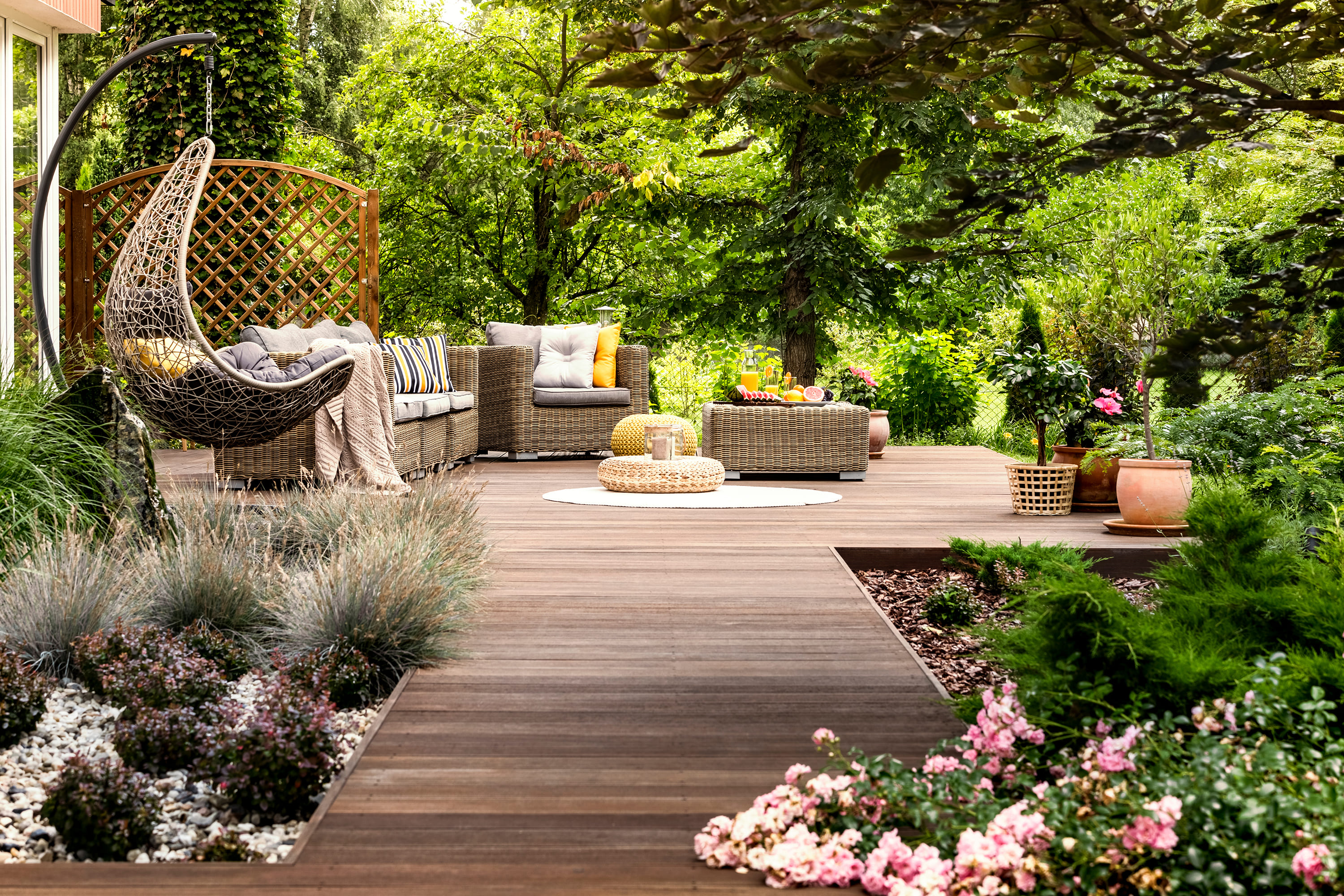
Your garden is your space, and like any space, what you do with it is your decision.
You can decorate it with the things that bring you joy, the things that lift you up when you walk out and see them. That’s the aesthetic side of your garden, and it does matter. But aesthetics on their own aren’t the point. A garden that looks right but does nothing for you hasn’t actually changed anything.
The right garden has to function. It has to do a job, and that job is different for every family. Which is exactly why it can’t just be copied from a magazine.
Which job your garden needs to do usually starts with you. Maybe it’s a place you like to sit in, with a cool drink or a warm cup of tea. A place to think, to switch off from a day that didn’t.
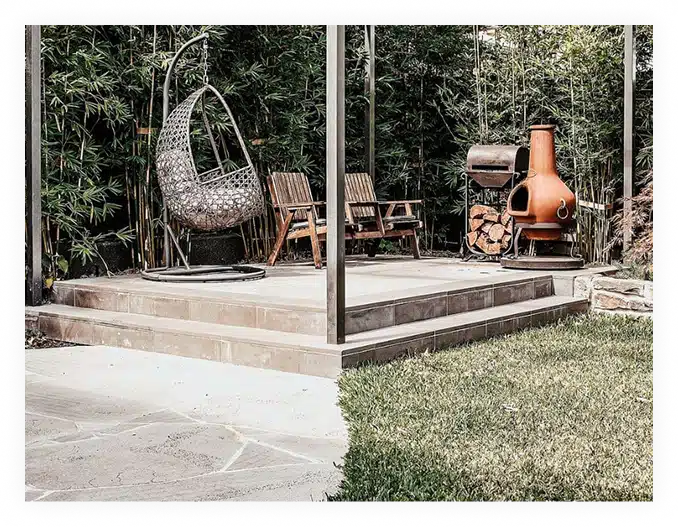
But it rarely stays just there. A garden that’s working properly will naturally extend outwards. To embrace your immediate family first. Then out further to the people around you. The extended family who usually come over for a Sunday lunch. Those old friends who end up staying two hours longer than they planned because nobody wanted to go back inside.
And underneath all of the things that this garden brings into your life, sits something else that people underestimate: nature itself. A great garden is actually a chance to be near something that’s growing, that’s alive. Something that isn’t technological or a screen. This is not a small part of what a garden gives back to a family. It’s actually a large part. A very large part.
A garden with elements of nature in it is a garden that changes with the seasons. That adds a harmony to your life. That helps you experience more of all the wonderful things that the changing seasons bring. Not just the flowers, but the songbirds and butterflies of spring. The cool leafy shade that tempers the hottest summer days. The brilliant, warm, earthy colours that visit you during autumn. And yes, even the stark, sometime frigid crispness of winter.
In cities laden with asphalt, concrete and steel, it’s harder to feel the subtle, organic changes of the seasons that nature gives you. And it’s harder to escape the extremes these cities bring.
But a garden brings sanctuary to your life. Quiet corners you can escape to and read a book. Sunny spot where you can lay and soak up the winter sun. Places you can soak in the golden hour and enjoy the sunset to come.
Nothing changes your life, quite like a garden can
Of all the environmental changes you could make in your life, there’s one thing that makes changing your garden different, and better, than them all.
It’s there for you, 365 days a year.
You don’t have to save for it, book it, or wait for the school holidays to arrive.
You can walk out your back door and there it all is. In your reach, ready to be used anytime. (Or changed again if it isn’t quite right yet.)
And it genuinely has the power to change the way you live your life every day. In small ways and large.
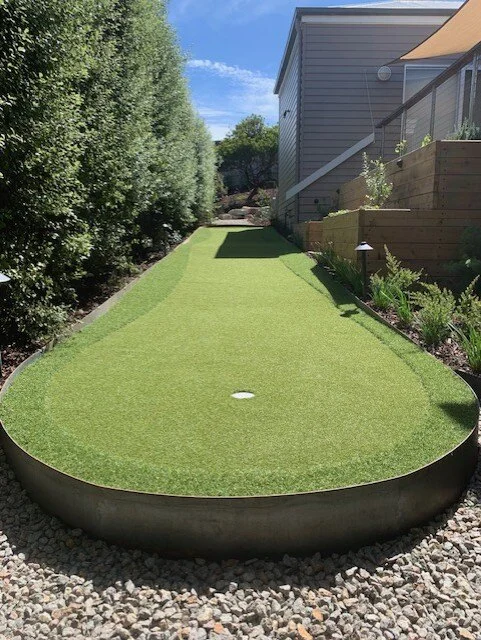
Lights you can now switch on for an evening that used to end when the sun went down. A water feature that constantly plays its tinkling, gurgling tune for you, relaxing your mind whether you realise it or not. A chessboard left permanently outside because someone in the family might step back into the game at any moment. A patch of lawn with a net set up for badminton or with enough space for the kids to have a proper game of cricket after dinner. Or even a basketball hoop that gets used more than anyone expected it would.
Maybe it’s a pool that makes your home not just more popular with your kids but with all the kids in the street. (Suddenly they have more friends than you ever expected.)
Maybe it’s none of that, and it’s simply somewhere quiet enough for you to sit and read a gripping book. The specifics matter less than the fact that they’re yours to choose, and yours to change again next year if what your family needs has shifted.
In my 35 years of designing and building gardens, I’ve watched this whole scenario play out time and time again. The client’s husband who swore he had no interest in the new garden project is the one who buys a chair to sit in the garden the week after the last plant went in. And now sits in it every Saturday morning enjoying his coffee and a good book. Nobody predicted that. It wasn’t in that client’s brief. But it happened because the space was finally built to be used, not just looked at.
You don’t get many chances like this
Did you realise there are only a handful of things in life you can change that will lift the amount of joy you get out of an ordinary day. And do it permanently. Unlike the temporary lift you get from a holiday.
Most of the alternatives are hard work, expensive – if you get them wrong, or take years to arrange. A garden isn’t like that. Once it’s done, it doesn’t really ask a lot more of you. It’s simply there, every day, waiting for you and your whole family to step outside and enjoy it. Quietly creating moments that end up mattering more than the ones you planned.
That’s the whole point of changing your environment to change your life. You don’t need to change everything. But you do need to change the one thing that’s already yours, already outside your back door, and already waiting for you to actually use it.
Andrew Whyte has spent 35 years designing and building gardens across Melbourne’s bayside and south-east. Whyte Gardens builds gardens people actually use, because a garden that’s only ever looked at was never really finished.