
Here is a question most people never think to ask. Do you know where your property’s boundaries are? Not where you think they are, but where they actually are!
We did a project in Kew a while back, which included a water feature, a rust feature and a trellis along the fence line. You can see it all in the photo.
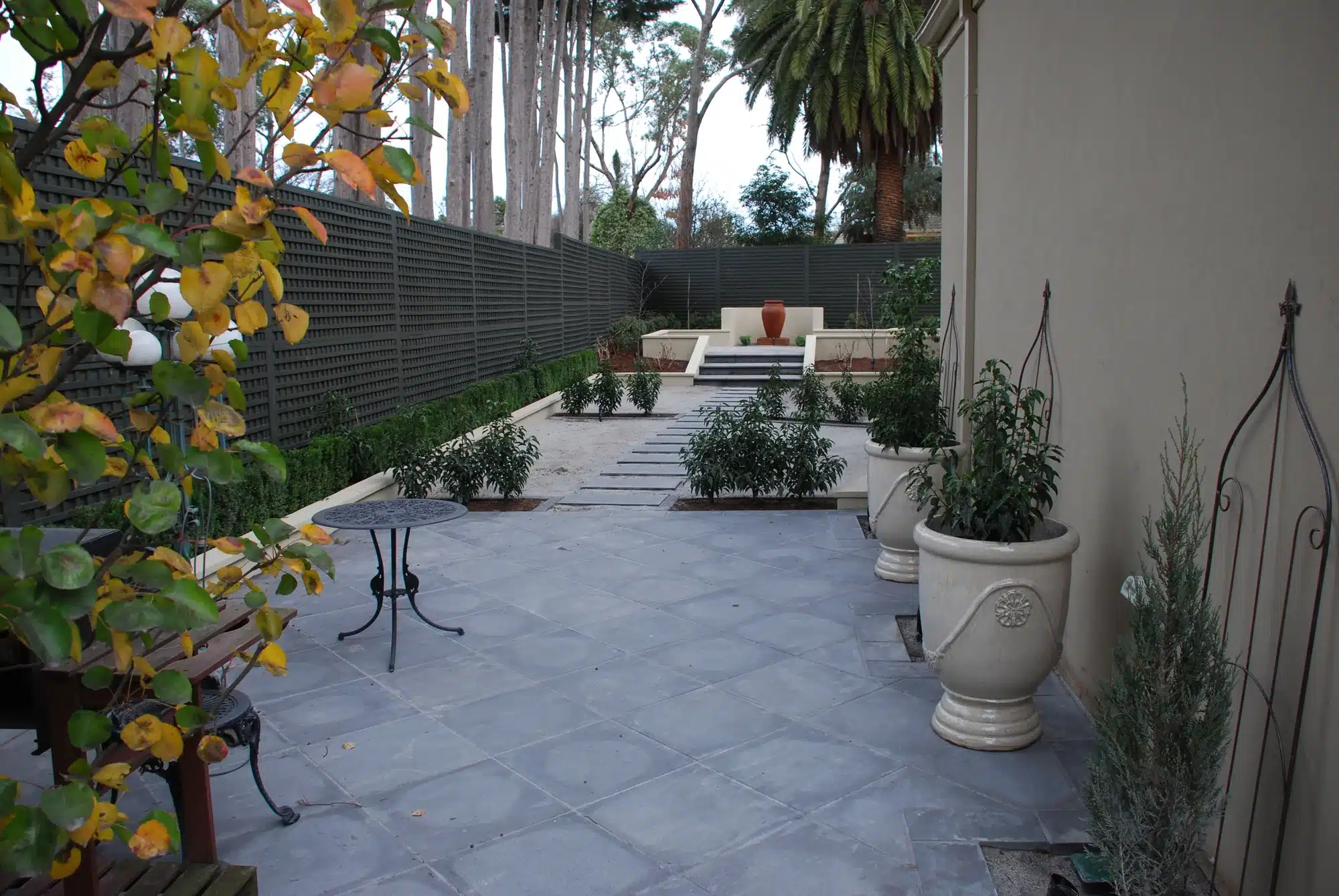
See that big palm tree behind the trellis? At the time of the project, everyone believed it was on the neighbour’s side. But the truth turned out to not be that simple.
None of this came up while we were designing and building the garden. It only surfaced later, when the client decided to sell the house. As part of the sale process, the boundaries were properly surveyed. And what they found was that the fences were in completely the wrong spots. The boundaries were nothing like what we had all worked to.
That fence behind the trellis had to move a full metre back towards the neighbour’s house. Which meant the neighbours had to bring in a crane, lift that huge palm tree, and move it further into their own garden so the fence could go in the right position.
But that was not all.
On the other side of the property there was a whole row of trees. Just beyond them, down in a gully, was a train track. Which is government land. And that fence turned out to be in the wrong place also. It had been incorrectly constructed closer to the house than it should have been. So all of those trees had to come down, and a new fence went up that was on the true boundary some 700mm closer to the rail line.
Add all that extra space along the whole length of a block, plus the area gained near the palm tree and that becomes quite a considerable amount of land. Land the client had owned all along without knowing it. They sold the house with more land on the title than they thought they had, and made quite a bit more money than they were expecting.
It worked out well for them. It does not always. If those fences had been wrong in the other direction, parts of the garden we created would have been built on someone else’s land. And that would have cost them a lot of money, instead of making them some.
So the lesson is simple. Before you build anything near a fence line, find out where your boundaries actually are. Not where the fence is. Where the boundary is. They are not always the same thing.